Your Scalp Is Skin. So Why Are You Still Treating It Like Carpet?
There's a saying in Korea that goes: if the scalp sags by one centimetre, the face sags by three.
It's the kind of line that sounds like it was invented by a marketing department, except it wasn't. It has been circulating in Korean beauty culture for years, and it explains something the rest of the world is only now catching up to. In Korea, the scalp has never been an afterthought. It's the foundation. Everything else is downstream.
The West has finally noticed. The industry is calling it skinification — the idea that your scalp is skin, and deserves the same ingredient sophistication your face has been getting for a decade. It's the fastest-growing corner of haircare, and it's the reason your feed is suddenly full of scalp serums, scalp exfoliants and, inevitably, scalp SPF.
Some of that is real. Some of it is a shampoo with niacinamide in it and a £15 price rise. Here's how to tell the difference.
The bit that's actually true
Your scalp is skin. Not like skin — it is skin, and it's some of the most metabolically active skin on your body. Same layers. Same oil glands. Same barrier function. It gets dry, it gets congested, it gets irritated, it gets sun damage. The only difference is that it's covered in hair and you never look at it.
And here's the part that changes the maths: hair grows out of it. A hair follicle sitting in an inflamed, congested, flaking scalp produces a hair with a compromised cuticle — and the cuticle is what makes hair look shiny. Trichologists have known this for years. Dandruff doesn't just look bad on your shoulders; it visibly changes the quality of the hair growing beneath it.
So when the industry says healthy hair starts at the scalp, it isn't a slogan. It's the mechanism.
Which brings us to glass hair
The other trend of the moment — mirror-flat, light-bouncing, red-carpet hair — is the same story told from the other end.
Glass hair comes from cuticle alignment. The cuticle is the outer layer of each strand, made of overlapping cells like tiles on a roof. When those tiles lie flat, light reflects cleanly and hair looks like glass. When they're lifted — by bleach, by perms, by a straightener at 220°C, by brushing wet hair like you're sanding a floor — light scatters, and hair looks dull no matter how much oil you put on it.
This is why hair oil alone never quite works. You can coat a rough surface in gloss, but you haven't fixed the surface.
What does fix it: acidic products. A low-pH rinse flattens the cuticle physically — which is the entire reason apple cider vinegar rinses have survived from folk remedy into serious formulation, and why acidic shampoos exist for colour-treated hair. It's also why bond-repair treatments and weekly deep conditioning do more for shine than any amount of serum applied at 8am in a panic.
What to actually do about it
A scalp routine is a skincare routine. Same four steps, same logic.
Cleanse properly. Most people wash their hair and never wash their scalp — they lather the lengths and rinse. Get your fingertips onto the skin and spend sixty seconds there. If you use dry shampoo, styling product, or live somewhere with hard water, you have build-up sitting on your scalp whether you can see it or not, and a clarifying wash once a week will do more than any serum.
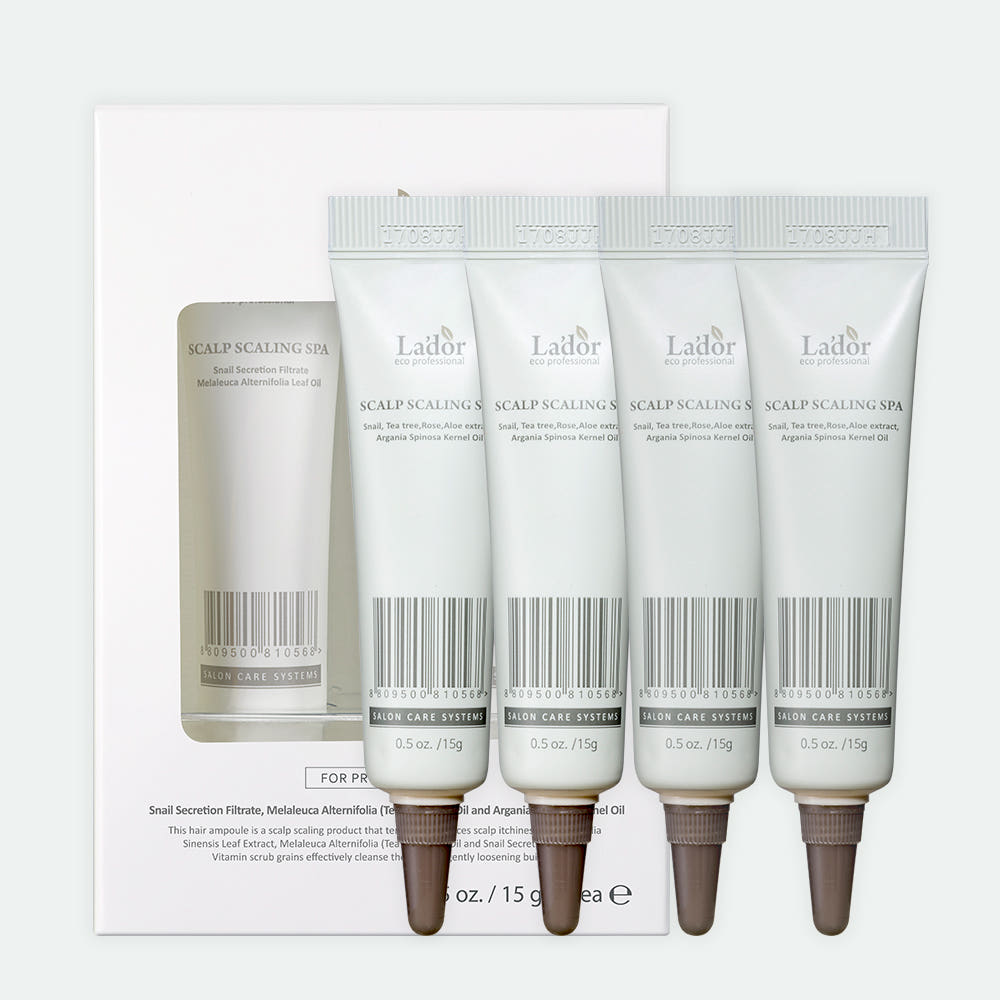
Exfoliate — but weekly, not daily. This is where the carbonated Korean scalp ampoules earn their reputation: you apply one to a dry scalp, it fizzes, and it lifts the sebum and dead skin that ordinary shampoo skates over. It feels faintly ridiculous. It works. Once a week is plenty; the scalp barrier is not something you want to strip.
Treat, with something that stays on. A rinse-out product has about ninety seconds to do anything. A leave-in scalp serum or tonic has all day. This is where the actives live — and it's the step almost everyone skips.
Protect. Your scalp gets more direct sun than any other part of your body. Your parting is, functionally, an exposed strip of skin with no SPF on it. You don't necessarily need a dedicated scalp SPF product to solve this — a hat solves it — but do stop pretending your head isn't in the sun.
And the bit we'd be sceptical about
Not all of this trend is substance.
A scalp serum will not regrow hair you've lost. It can improve the condition of the scalp your hair grows from, and hair that looks fuller and better supported at the root. That's a real and worthwhile outcome. It is not the same thing, and anyone selling it as the same thing is selling you something else.
Scalp microbiome is doing a lot of heavy lifting in a lot of copy right now, usually attached to a product that is simply a decent shampoo.
And skinification has a price tag. The same bottle with peptides in it costs more, and sometimes that's ingredient cost and sometimes it's the word peptide. Ask what the active is, what it's for, and whether you have that problem.
Where to start, if you're starting
Don't buy a seven-step scalp routine. Buy two things.
One scalp cleanse or exfoliant, used weekly — the carbonated ampoules are the most satisfying entry point, and the most obviously effective. One leave-in scalp serum or tonic, used daily, chosen for your actual scalp: something clarifying if you run oily, something calming if you itch and flake.
Give it a month. Scalp care doesn't work on the hair you already have — it works on the hair you're about to grow, which means you're waiting on biology, not on marketing.
The good news is that the hair you grow next is entirely up to you.